On Containing Multitudes and quietly existing
We Contain Multitudes DCA Exhibition Review + ramblings!

I didn’t expect myself to make it - by which I also mean that I absolutely did expect myself to make it. Make it to the exhibition at the DCA, a quietly political show bringing together four artists who’s practices are shaped from a position of disability.
I didn’t expect myself to make it because this past month has been a month of flaring. not a singular flare, more like a sound wave of a flare, so obviously no one can understand exactly what that means, looks, or feels like. Others who know though, will. The anxiety of deciding to do an activity that may well extend your flare by consequence is truly powerful. Sometimes it holds me in such a grip it feels paralysing, like a weight on your chest warning you of every breath to be careful - you can’t always predict the risks, so is it not safer to just stay put? My point is that I saw this exhibition pop up and felt, for the first time in ages, desperate to get my body there.
‘We contain Multitudes’ was on from Feb 7th to April 26 and now, when I look at the calendar and my camera roll, I can see I was on and off ill in one way or another from around that time. I find small video diaries I leave myself in my camera roll - one from the 11th of Feb where I am walking in the rain with the neighbours dog, puffy faced recounting my symptoms: Sore throat, fatigue and a dayslong headache. There’s never any start and end to my symptoms, as with most chronic conditions, it is, obviously, chronic! (brain fog is writing this with me) But I see myself between images of cliff edged landscapes and various dogs I walk and the one year old I look after now and then, trying my best to move through the motions. Because this is it, we contain it all - from the days where it doesn’t feel like we have an illness at all, to days when it’s so heavy and feels impossible to ever feel better. It’s such a small yet expansive experience and this exhibition was using this language too: multitudes!
So, weeks went by when the idea of going making the trip would steal too many spoons - until I did, eventually, on the final day of the exhibition, find my body standing alone in the vast white room, as if inside the cool walls of a conch shell.
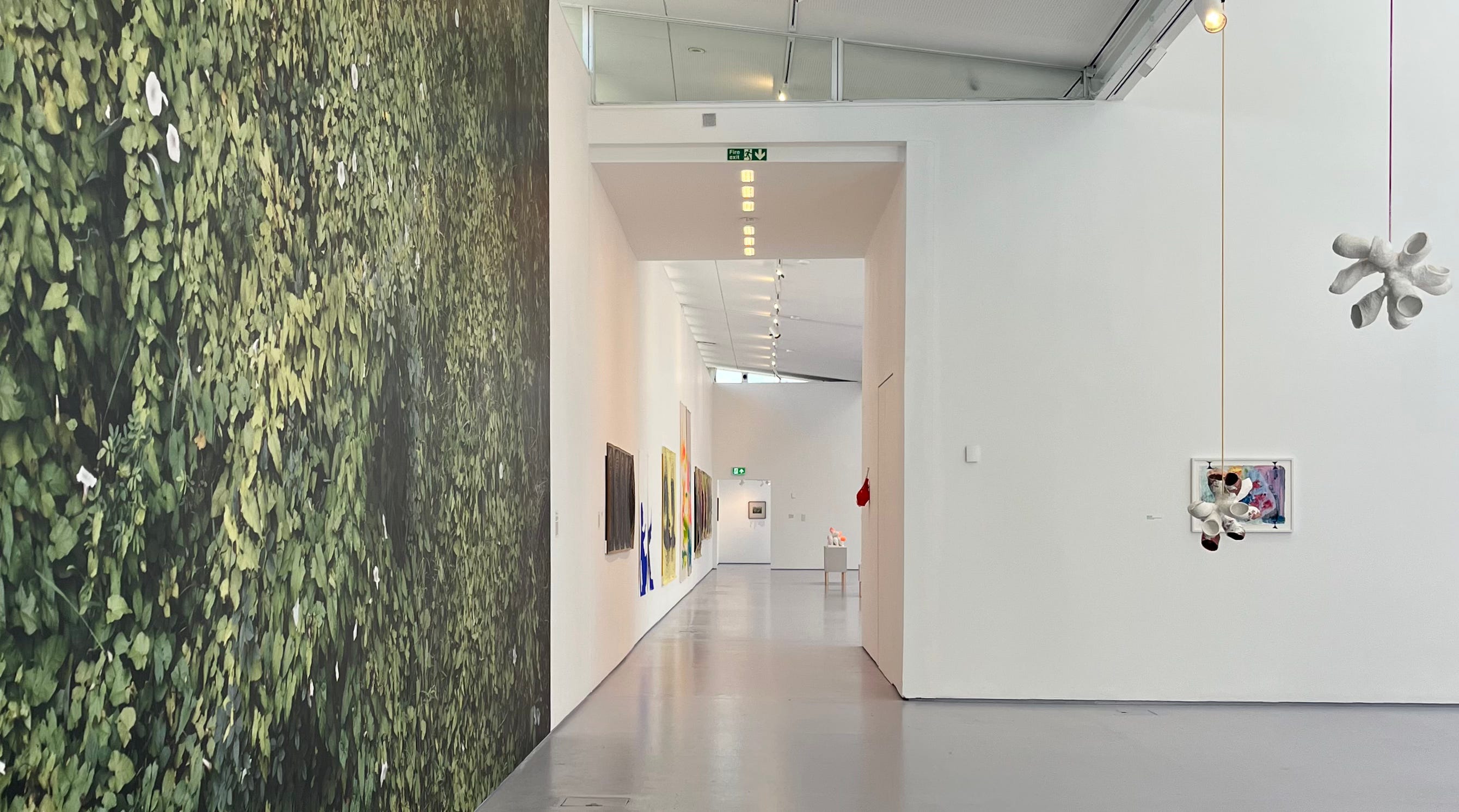
I took the mint coloured guide and wandered in. A wall of cascading bindweed, vines with trumpet shaped flowers, greeted me. A plant known for it’s ‘disablement’ of other plant species, Longhurst photographs and studies it’s patterns and beauty that weeds aren’t given the attention for. The plant kingdom is one where all folk can feel free, I believe, with queer ways of being creating a literal space to grow and become - but alas, humans come in and name weeds weeds and create a whole group of neglected, if not hated, plants. Here, in all its glory, the bindweed stuns in the gallery, as if it is the bank of a walkway or a wall left to be swallowed by the green tentacles. A weed being the star of the show.
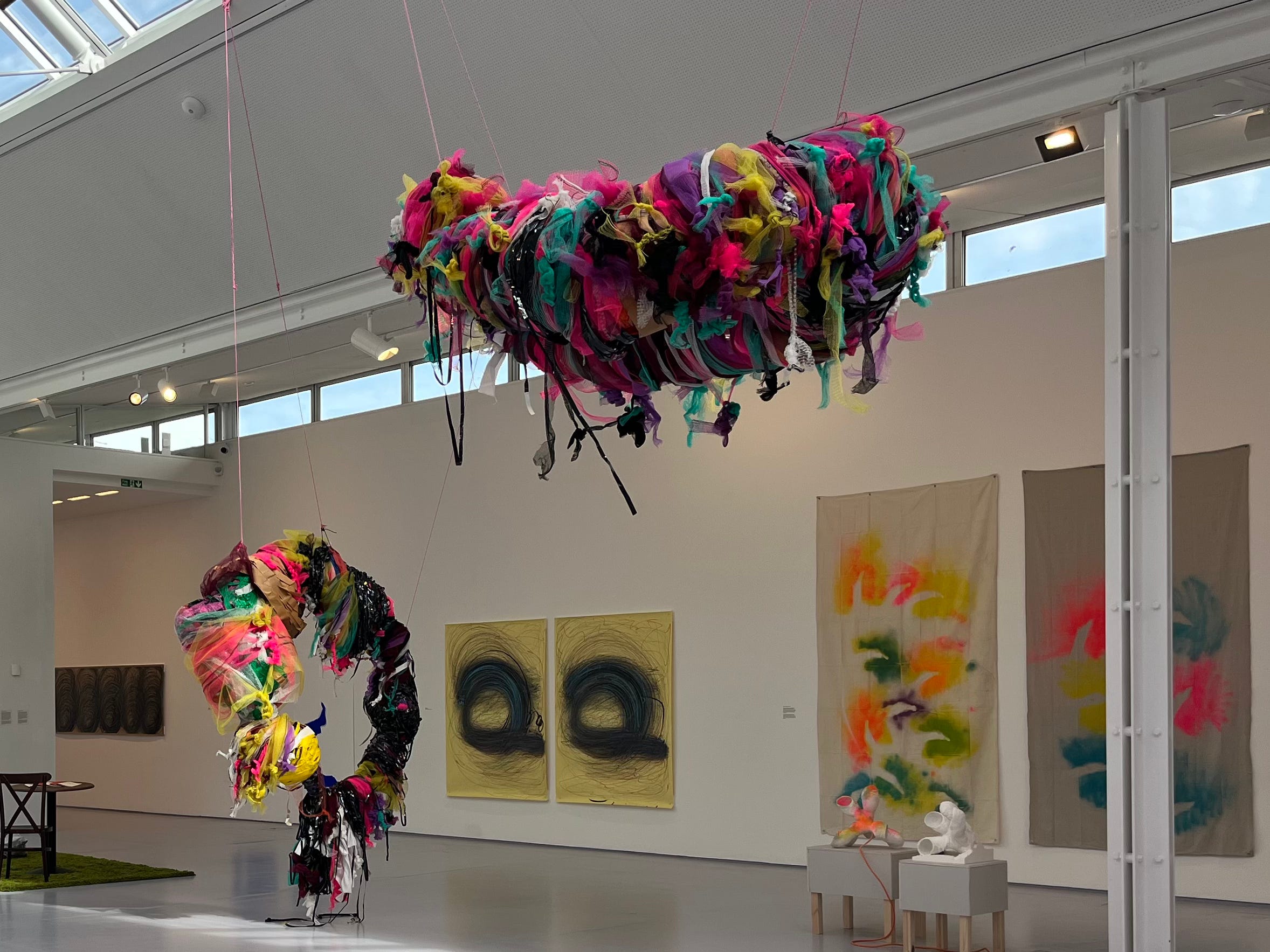
Then, a wrapped creature, a bulbous form of florescence hangs from the ceiling. A giant spider hybrid - one that isn’t meant to hide in corners, takes up the centre stage. Nnena Kalu, winner of the Turner Prize last year but also I learn; lover of ABBA, dancing, painting nails and wrapping things in rhythms. She literally creates forms abundant with the energy of these things. You can feel her body in the piece, the sound of the vhs tape and duct tape and all other materials pressed together, wrapped between her arms in the lines of her hands, moving in rhythm. You can feel the music that played whilst she grew these pieces, like a gardener nurturing seeds of joy. I hadn’t come across Nnena before this, I wish I did, but I am so glad I stood with her work. She is the first autistic and learning disabled artist to win the Turner award. Being partially non verbal her work becomes her language. Personally, I feel being Autistic adds a new understanding to language. For me, it’s either entirely necessary and I will select every word as if separating pixels to paint the write image. Or, there are no words and the body takes over. When I have no words, I still see images and words floating around, I just can’t grasp them. I imagine it’s like being a fisherman who can see all the fish but can’t catch any (I have never even fished ha). Seeing these sculptures as Nnena’s expression was like a grand gesture and middle finger to the expectation of always needing language to perform to expectations. It’s like music with no sound.
- Another couple are wondering around the forms in silence. It does feel as if disco should be playing so the pieces can dance. -
Andrew Gannon’s sculptures and paintings echo the body too, records of shapes and movements that his body maps. I began thinking about how much of this exhibition is about records of bodies and how moving through the world as a disabled person unavoidably involves creating new forms, even if you’re not an ‘artist’ as such. Whether is casts or kinesiology tape for holding muscles in place, or the still life’s we unintentionally form on the bedside table: pill packets, old glasses and mugs, heat patches, balms meant to sooth and tissues old and used. Our capacities and existences create in one way or another. I’m not sure exactly what I mean but it’s a feeling of existing invisibly, but there really being so much evidence, it’s just quiet evidence.
I got to Lafarge’s work, I sat down and took a breath. I could sit on a sun lounger! in the sun! in a gallery! luxury!
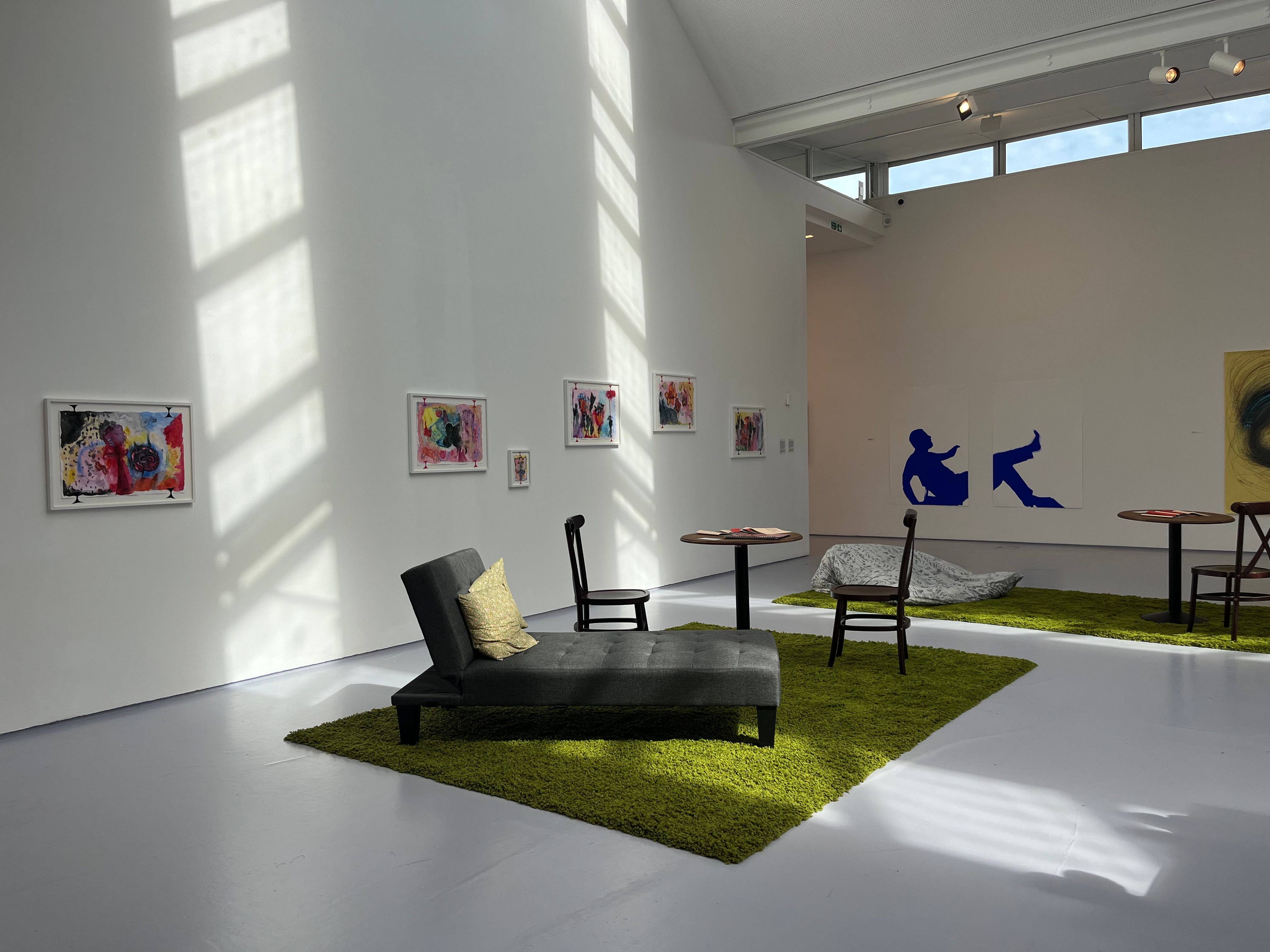
On the table a handful of Daisy Lafarge’s poetry pamphlet 'The Romance Of The Sick Rose’ lay silently in the sun. I sat on the sun lounger, not lying down as I would have snoozed right there, how lovely, and read. Such a sharp tongue with soft tones.
There’s an intimacy with reading that connects you physically to the art - the art being the words, holding it, running your eyes over it. Sometimes, especially in galleries, not being able to touch creates a physical and psychological distance between the viewer and art that leaves a general sense of separation. And therefore not allowing relatability between the two to even begin to develop. I feel art is ‘made’ when a connection is developed between the piece and the viewer, whether positive or not, that is the affect. To be able to sit with Lafarge’s words, next to her beautiful dreamlike paintings, felt like being held in welcoming arms. The work said, come in and please, smell the roses. So I stepped into the (sick)garden and even upon leaving, the garden has remained with me.
‘Taken together (paintings and poetry), they offer a portal into what might be possible in both thought and image if, instead of denying the experience of the body and its histories, pain is allowed to enter.’
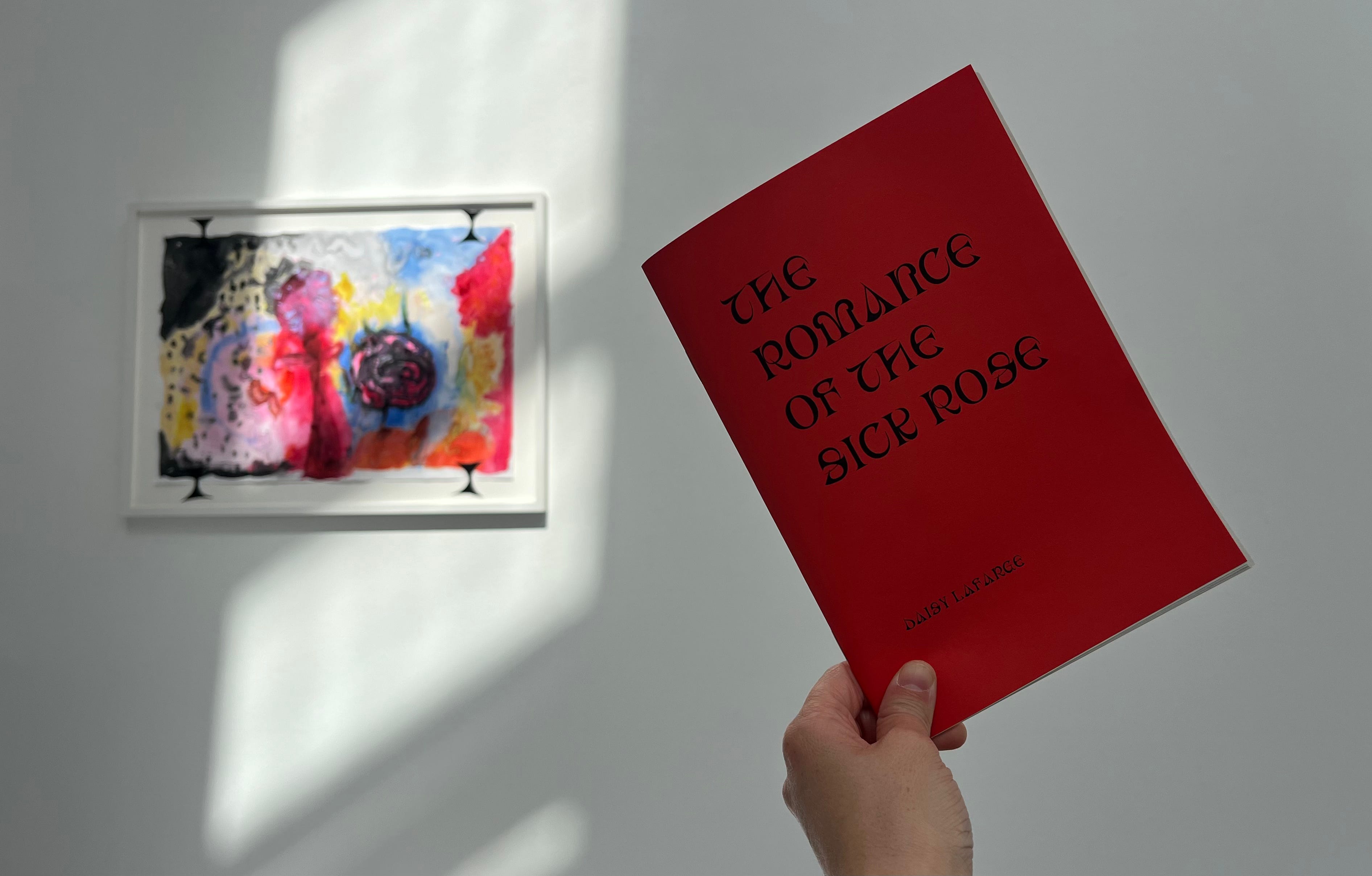
The language mirrored the haziness in the paintings by being almost feverish with imagery and intimacy - in and out of the romance of the love/hate, all consuming relationship with chronic pain and illness. I read Paul a few years ago and the same feverish tone hung with me. Perhaps this is a reflection of the experience of living with chronic illness - it is feverish, bending between altering states with no intervals, in and out of observing symptoms and being utterly consumed by them. Daisy’s work feels brutally honest and curious in all forms, she is unafraid of the ugly and uses imagination to intentionally observe the malleability of feeling and experience. My favourite line ‘O Rose I am sick. You wake me at night with a bruise in the shape of a question’
Overwhelmed (and needing to sit down again and have a much needed cup of tea) I left and said thank you to the invigilator, but really to the exhibition. Because, being inside We contain multitudes felt like finally being a space where I was understood and part of the norm - unlike outside these doors where I feel constantly misunderstood and underrepresented. Like a weed. The space created beauty and proof of existence, rupturing the way those disabled or ill or unable to function in the way society expects are represented and treated. This was a show of defiance but also survival. Survival is pain and joy and grief and romance and rest rest rest. We are here, containing multitudes! like the bees keeping the world humming, enveloped softly in the flowers under everyones noses.
Anna x